

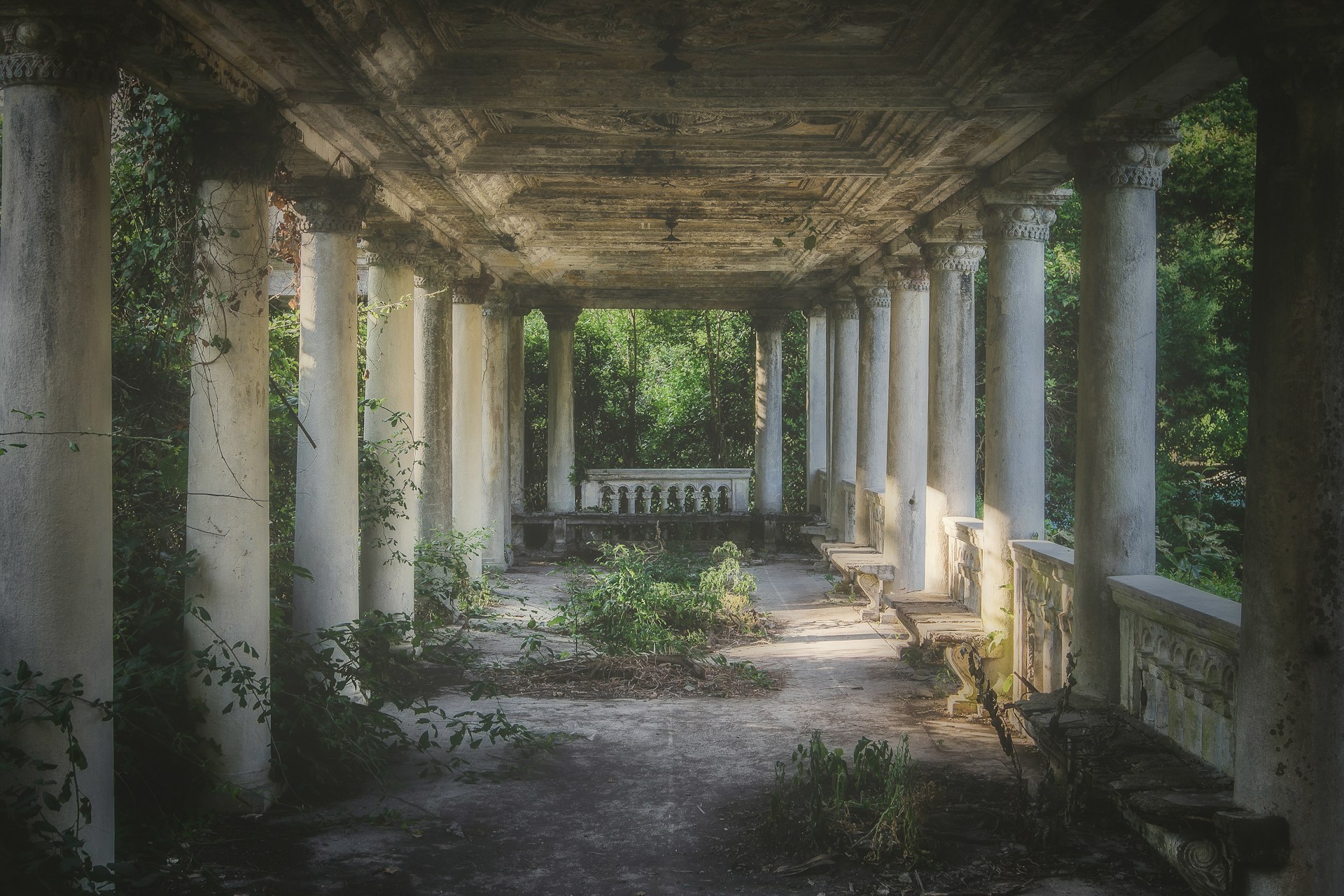
Beneath the weathered stone of an abandoned monastery in northern England, a whisper of the past waited to be heard.
When the Ancestra Trust team began restoration work on the site in 2024, no one expected what lay hidden beneath the surface. The building had stood since the 12th century — its walls scarred by war, weather, and neglect — but still steadfast, still breathing history through its cracks.
Then, during a structural assessment, a faint hollow sound changed everything.
Behind one section of the eastern cloister wall, sealed centuries ago, lay a forgotten passage. What we uncovered would become one of the most extraordinary finds in the Trust’s recent history.
Careful excavation revealed a small subterranean chamber — untouched for hundreds of years. Inside were fragments of frescoes, fragments of parchment preserved in clay jars, and a series of engraved stones arranged in deliberate patterns.
At first, their purpose was unclear. But through patient study and multispectral imaging, faint Latin inscriptions emerged: prayers, names, and even notes from the stonemasons who had built the monastery itself.
These weren’t mere markings — they were voices of the builders, memorialized in stone.
“It was as if the walls themselves were trying to speak,” said conservator Elias Trent. “And all we had to do was listen.”
Preserving such a site demanded a delicate balance between technology and touch.
Laser scanning allowed us to reconstruct the chamber digitally before any physical restoration began. Advanced microclimate control protected the fragile fresco pigments, while 3D modeling helped reimagine how the chamber once appeared in the 13th century — lit by a single oil lamp, echoing with quiet prayer.
Each discovery deepened the sense that this was more than a hidden room.
It was a time capsule of devotion, craftsmanship, and humanity — sealed away, perhaps deliberately, to protect it through the centuries of turmoil that followed.
As we documented the space, local historians uncovered records of monks who sought refuge during the Dissolution of the Monasteries under Henry VIII. Some of the names inscribed on the stones matched those found in exile records from the period.
For the first time, we could trace not just the architecture, but the people who lived, worked, and prayed within it. Their marks — small, personal, almost shy — reminded us that every wall ever built carries the memory of hands behind it.
The Echoes Beneath the Ancient Walls project culminated in a digital exhibition now accessible through the Ancestra Living Archives. Visitors can explore a 3D recreation of the chamber, hear readings of the translated inscriptions, and see the frescoes as they once appeared — luminous, intricate, and profoundly human.
For those who visit the site today, a transparent glass floor reveals the chamber below, allowing sunlight to touch the stones for the first time in five hundred years.
FIll out the form to be involved in our campaign to put new york first!

.svg)